CROAK! A first-hand intro to amphibian monitoring
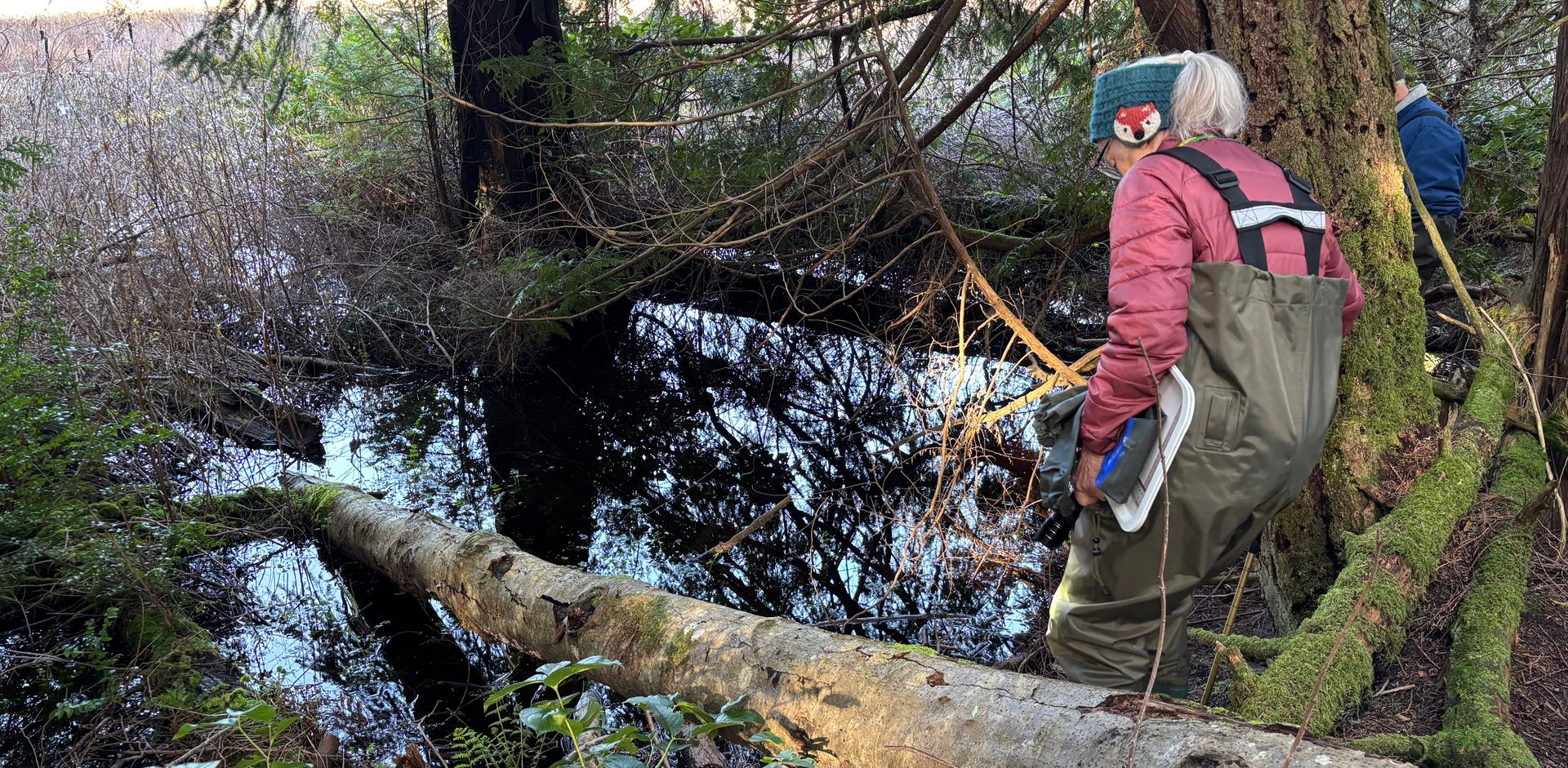
On a beautiful (chilly!) morning, I joined citizen scientists at Islandwood on Bainbridge Island to shadow a group of CROAK (Community Research on Amphibians of Kitsap) program participants. I learned about their work monitoring amphibian activity in bodies of water on the Islandwood campus.
Armed with waders and buckets of tools and instruments, these volunteers are part of a broader amphibian monitoring program led by the Woodland Park Zoo. Since 2012, this program – consisting of approximately 100 volunteers – has monitored 17 sites for evidence of breeding amphibians. Volunteers log data in the Amphibians of Washington project on iNaturalist, where project curators verify the observations. These observations help program administrators understand where our local amphibians are – and aren’t – breeding across the region.
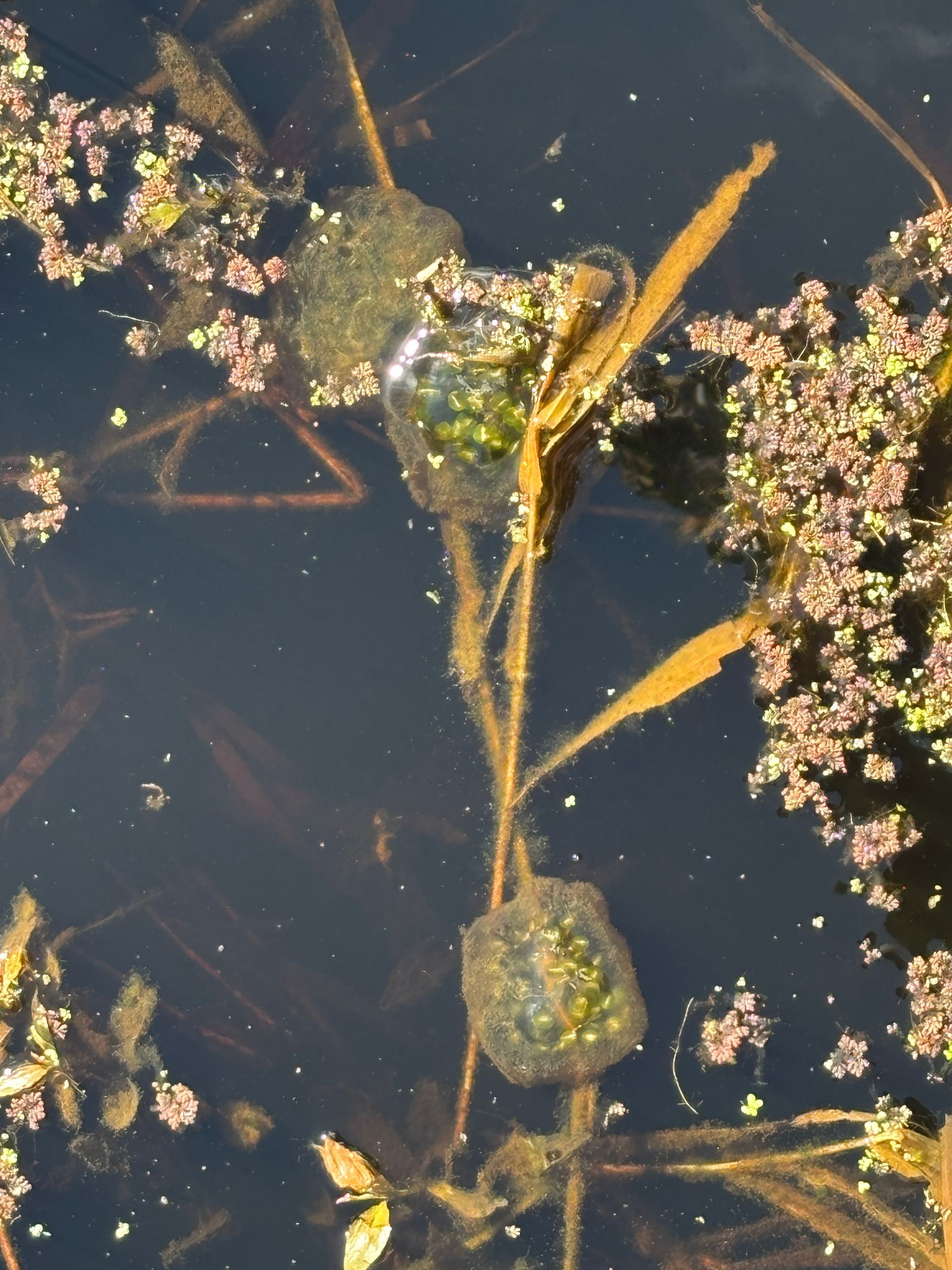
During our outing, teams were divided between two locations and set out looking for amphibian egg masses. This time of year, they expect to find masses for red-legged frogs, Pacific treefrogs, rough-skinned newts, long-toed salamanders, and more. Using very bright flashlights, scouts looked along the shoreline for signs of masses, while others donned waders and braved the cold water in the name of science. While one location didn’t garner any amphibian egg mass observations that day (perhaps due to higher than normal water levels at the site?), the other was a treasure trove - egg masses were visible along the shoreline every few feet, and kept the team busy gathering the needed information and measurements.
The group will continue to monitor the egg masses they’ve found as they mature, and log future ones. They’ll also keep an eye out for other animal clues that reflect a healthy ecosystem - like the presence of birds of prey, or beaver sign on nearby logs.
The outing was so informative, that I couldn’t wait to head home and explore the pond at my home to see what I could find. Sure enough, my family and I found multiple egg masses using the tips that I’d learned. They appear to be long-toed salamander eggs, and we look forward to watching them grow in the coming weeks.
Does this sound like fun to you?
Great! KEC is working with the Islandwood team to identify possible observation sites within the peninsula. If you’d like to get involved, let us know.