Memorializing Forests of the Pacific Northwest
 MEMORIALIZING FORESTS OF THE PACIFIC NORTHWEST
If you come to Oregon or Washington today, you might question why I’m commemorating something that seems so alive and present. Ahh, you’re seeing the trees but not the forest. Look closer.
The original forests, while dominated visually by trees, were alive with diverse vegetation and animal life. The cycle of life—an infinite pattern of birth, maturity, release, and reconfiguration of elements—worked together as a complex system. The forests anchored and stabilized the soil so that heavy rains were absorbed. They protected the top soil that had been developing over thousands of years. Their canopies captured the fog from the Pacific Ocean and brought water to the streams. They sequestered massive amounts of carbon.
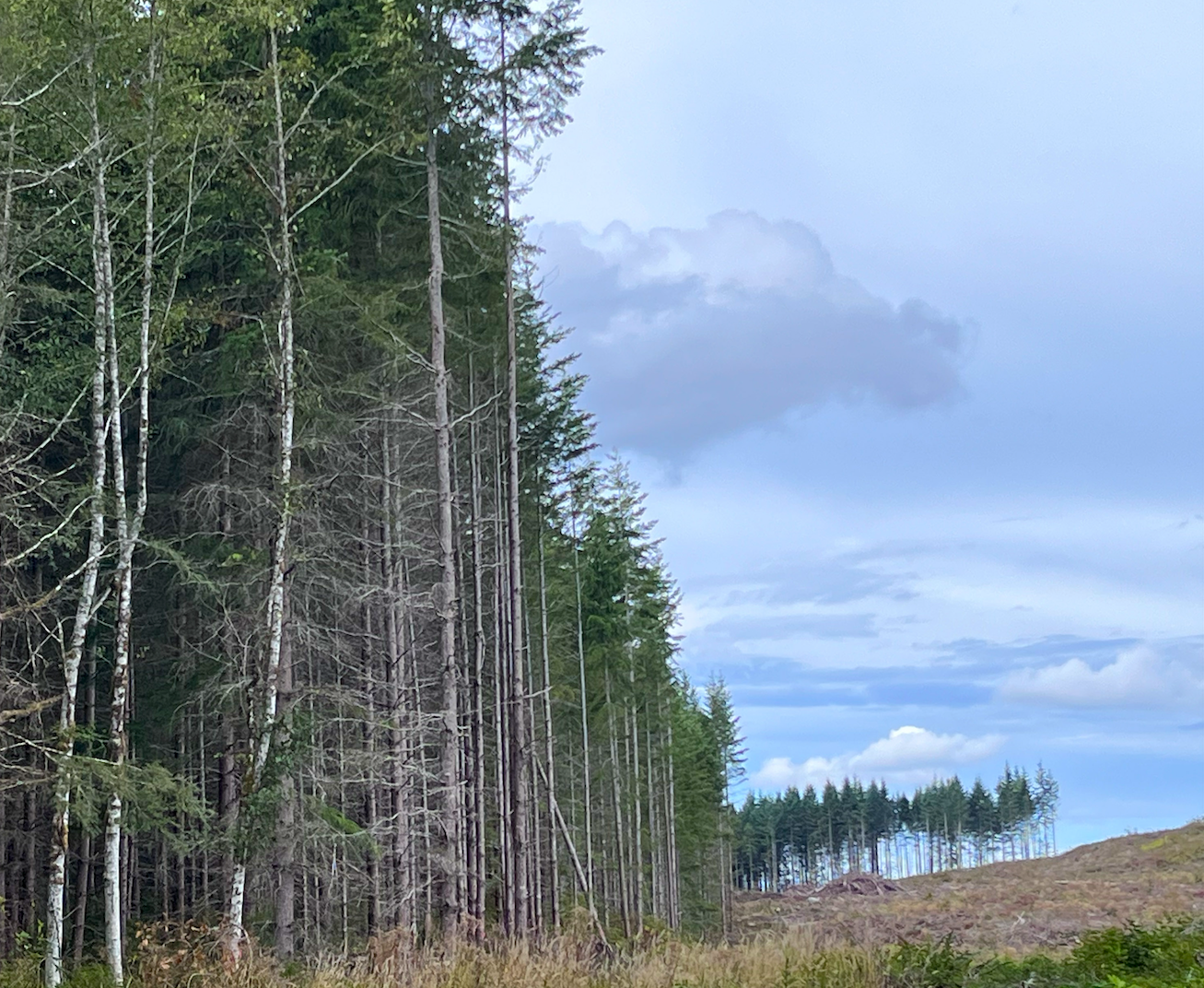
Today you may be looking at the monoculture of Douglas fir trees, industrial timber farms. The undergrowth is meager. There is no moss on the trees. This year, you are likely to see large areas of clear-cut land. The industrial forests are clear-cut every 35 to 40 years with the specific timing depending on the timber market. Timber prices are high now, especially in markets outside of the US, so the land is stripped. You might even see a small plane flying overhead spraying chemicals to control the undergrowth before fir trees are planted in preparation for the next market cycle.
Less obvious changes may be the most important. The micro biome of the forest’s soil is diminished. Pesticides have entered the streams. The salmon are dying due to their high sensitivity to toxins. The diversity of wildlife, birds, bees, plants, and more are gone. See Behind the Emerald Curtain that tells the story of situations in Oregon.
Fortunately, you may also see forests where sustaining the diversity of trees, plants, animals, and “living” soils are all being taken into account. These forests will not look like the original forests but they are being managed in a way that respects and protects abundant life.
We need not stand idly by. We can proactively help restore and rebuild the forest ecosystems or whatever ecosystems are important where we live and work. We are not going to bring back the forest of centuries past but we can use our creativity and expanded knowledge to support a healthy ecosystems keeping in mind the value of diversity and respect for nature, its cycles, and its mysteries. Nature is ready to do its part if we humans support nature’s ecosystems instead of undermining them. See the Rights of Nature to learn more about how to engage with nature and its cycles.
Beverly Parsons